A SaaS on predictable compute
Run your product on servers, Kubernetes and databases with a bill you can predict.
Servers and clusters provisioned in seconds, managed databases with point-in-time recovery, schedules and autoscaling so nothing idles, and budgets and caps that stop spend before the invoice does.
For Engineering, Platform, Finance
The situation
The product runs on a hyperscaler whose bill changes every month for reasons that take a week to explain. Development environments run all weekend and a database restore is a support ticket.
How it works
Step by step, and the product each step happens in.
01
Run the application
Servers with a full lifecycle from create to destroy, or managed and self-managed Kubernetes clusters with node pools that autoscale.
In KubernetesCloud console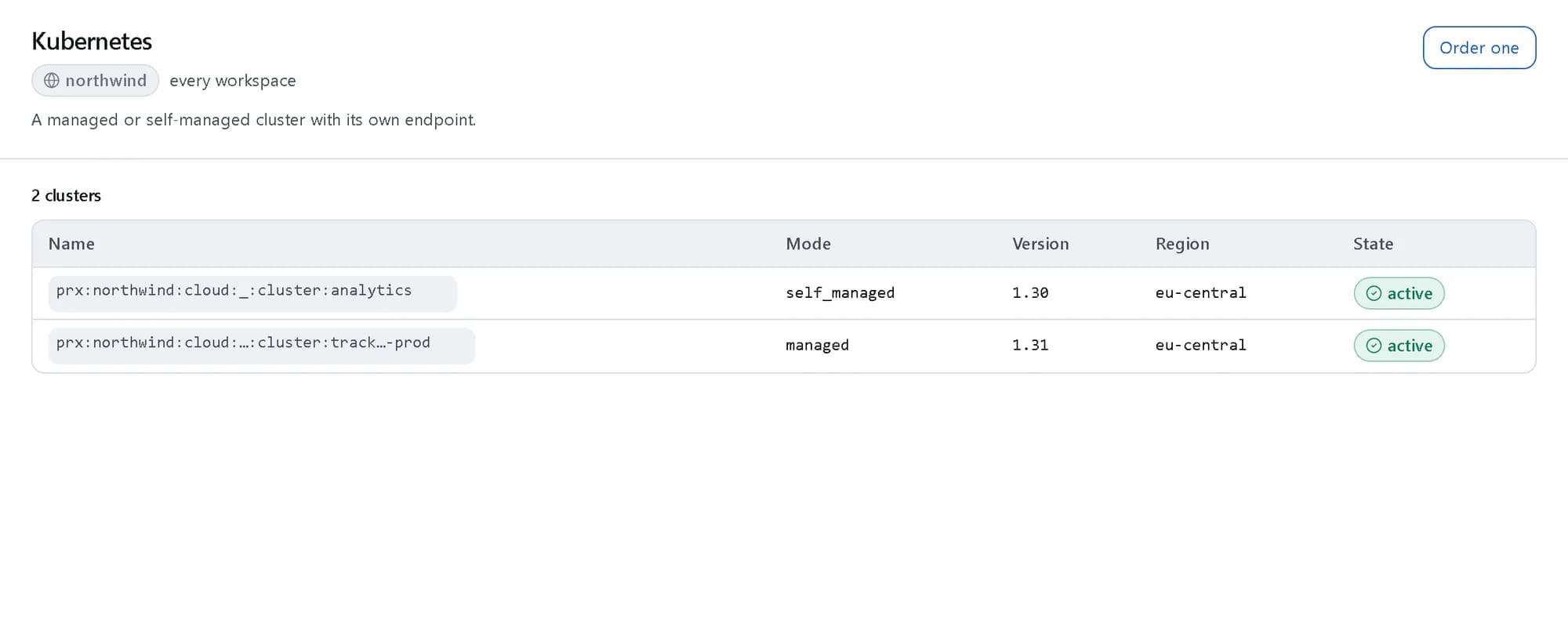
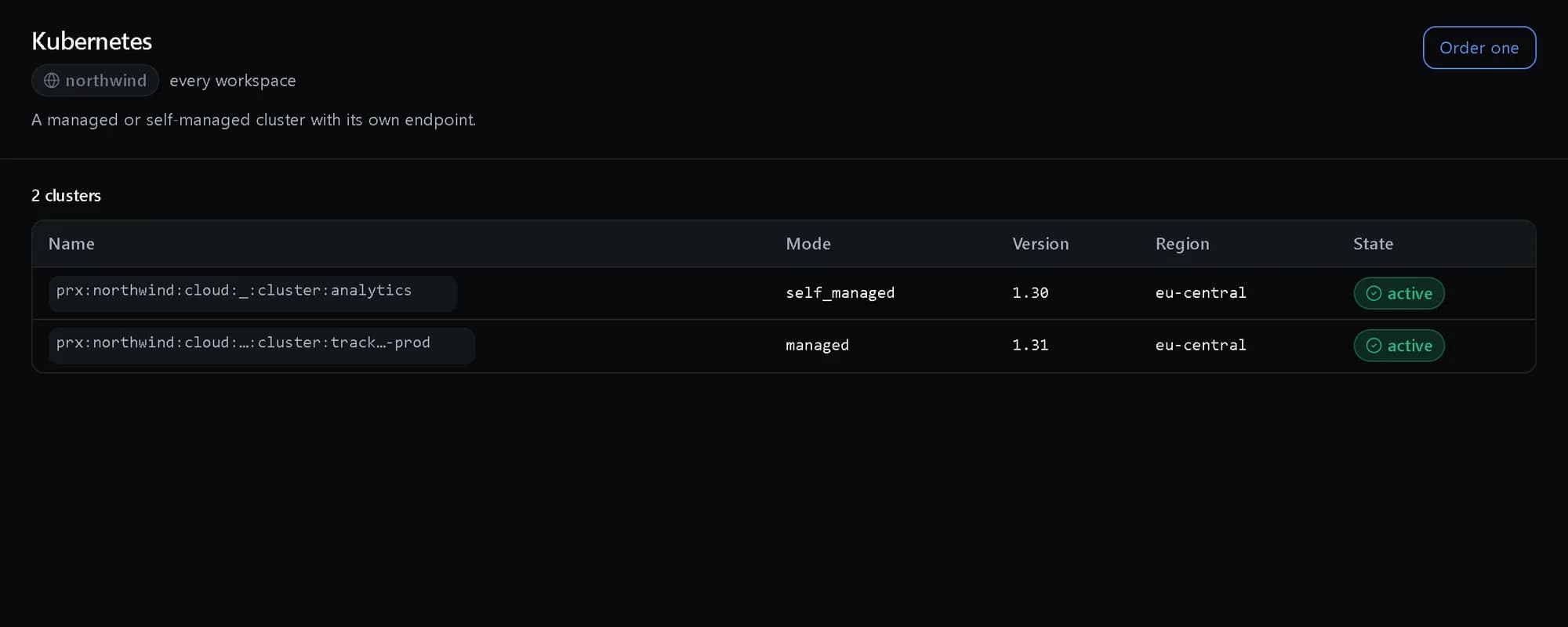
Managed and self-managed clusters side by side, one resource each. Shown with demo data. 02
Keep the data safe
Managed PostgreSQL, MySQL, Redis and more, with replicas, failover and automated backups with point-in-time recovery.
In Managed databasesCloud console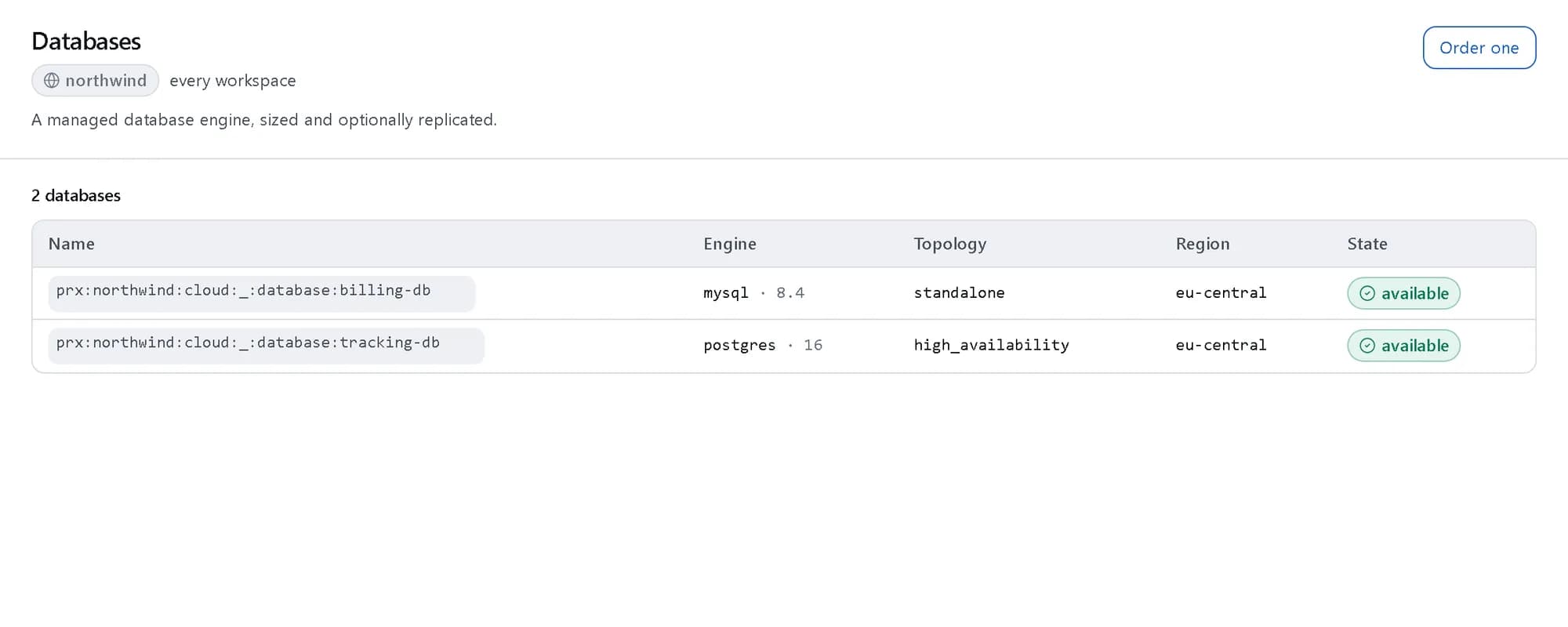
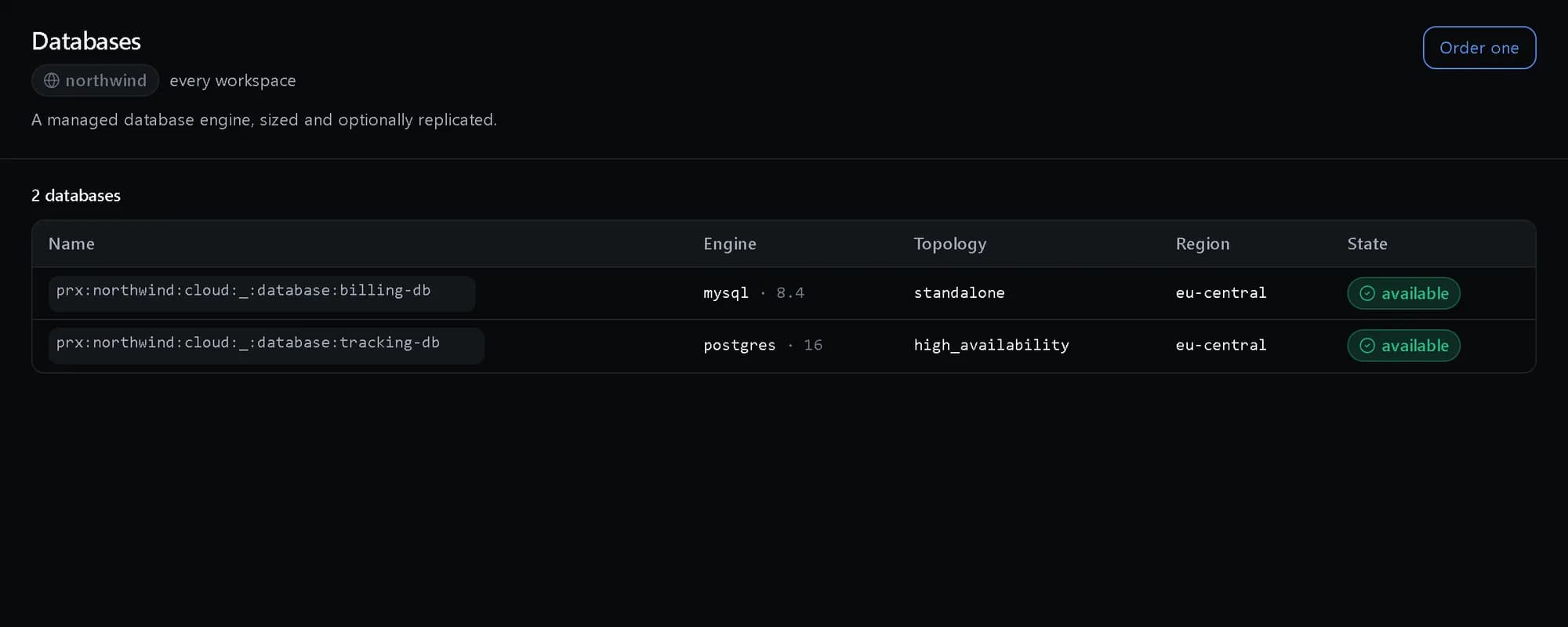
Every engine in one list, each with its topology and version. Shown with demo data. 03
Stop paying for idle
Start and stop schedules for development servers, and autoscaling node pools for production.
In Servers04
Know the price in advance
Hourly and monthly metering per resource at published rates, with proration on resize exact to the cent.
In Cloud prices05
Set the ceiling
Budgets, hard caps and prepaid-only accounts; an empty balance alerts first and refuses new provisioning.
In Pricing
What you get
Running in minutes
From sign-up to a running server in under five minutes, with no human involved.
A bill that matches the plan
Published rates per resource, metered hourly and prorated exactly.
Restores without a ticket
Point-in-time recovery and failover drills are in the console.
Questions, answered
Can we use our existing cloud accounts?
Managed Kubernetes can be provisioned across GKE, AKS, EKS, LKE, DOKS and others, alongside servers on the platform’s own substrate.
What happens when the balance runs out?
Low and empty alerts come first; then new provisioning is refused, and compute pauses after a grace period.