Intelligent Data OS
An open lakehouse you can walk away from.
Apache Iceberg and S3 semantics, with pipelines, SQL, notebooks, machine learning and governed generative AI on top. Portable by construction: the storage format is open and the catalog is standard, so leaving is a copy rather than a migration project.
What it does
The core capabilities, live in the product today.
Iceberg storage with time travel
Snapshots, schema evolution and point-in-time reads. A query against last Tuesday returns what was true last Tuesday, not what is true now.
Tables live in the open Apache Iceberg format on S3-compatible storage, readable by any engine. Schema evolves without a rewrite, and a point-in-time read returns what was true then — the property that makes leaving a copy, not a project.
SQL, pipelines and notebooks
Trino and Spark over the same tables, with pipelines that declare their lineage rather than having it inferred afterwards.
The engines you already know run over the same governed tables, and a pipeline declares its lineage as it runs — so where a figure came from is recorded while the work happens, not reconstructed for the audit.
Governed machine learning
Experiments, a model registry, a feature store with point-in-time correctness, and promotion gated on a model card and an approval. Every served model traces back to the snapshot it was trained on.
Features are point-in-time correct, so training never reads the future. A model reaches serving through a model card and an approval, and what is served always traces to the exact snapshot it trained on.
Generative AI with guardrails
Retrieval over your own governed data, with output schemas, budgets, a sovereign mode that keeps inference in-region, and the same entitlement filtering as every other read.
The model reads only what the person asking is allowed to see, because retrieval goes through the same entitlement filter as every other read. Output schemas, budgets and in-region inference are properties of the run, not settings to remember.
Catalog, lineage and sharing
Every table registered, every movement recorded as an edge, and sharing that is a grant rather than an export.
The catalog registers every table and records every movement as an edge, so a number on a dashboard traces back through every step. Sharing is an auditable grant — never a copied file nobody can recall.
How it works
- Console
Land your data once
Tables are stored in the open Apache Iceberg format on S3-compatible storage — readable by any engine, and yours to leave with.
- Data workspace
Work where the data lives
SQL, pipelines, notebooks and machine learning run over the same governed tables, with lineage recorded as the work happens.
- Catalog
Share by grant, not by export
The catalog registers every table and records every movement; sharing is an auditable grant, never a copied file.
The products in this pillar
Each one with its own page, its own published prices, and the same invoice.
See it in the console
Real screens from the products in this pillar, shown with demo data.
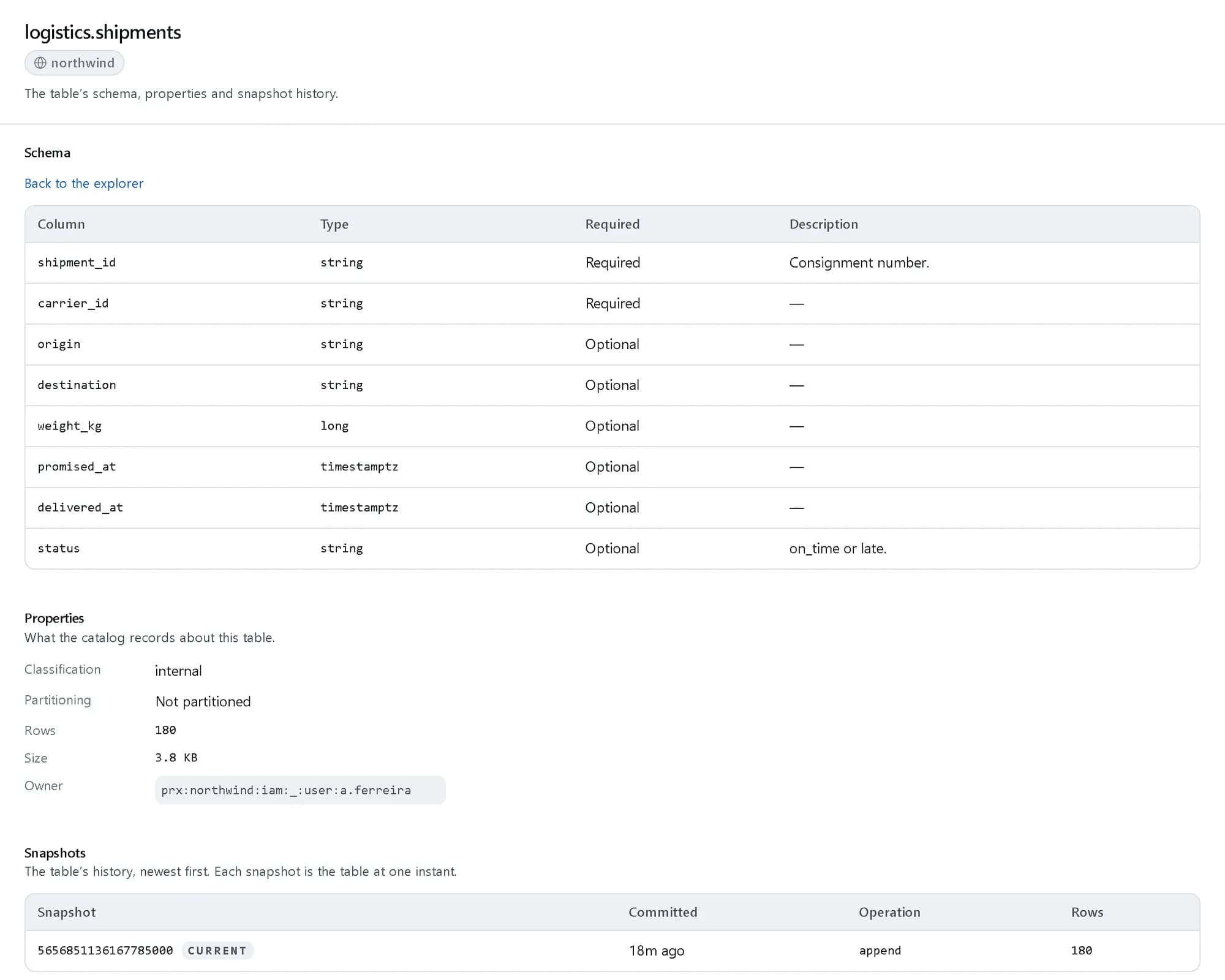
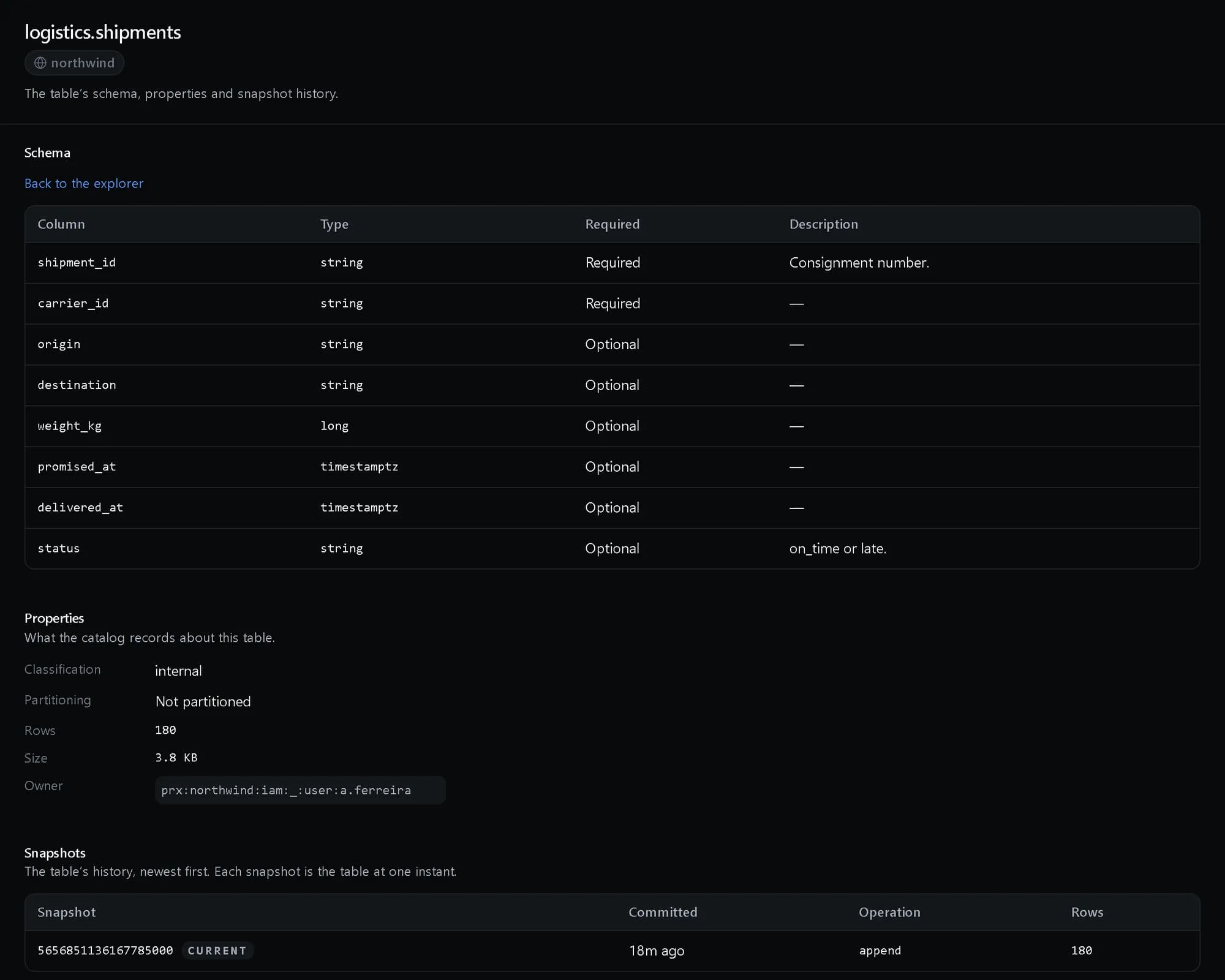
Lakehouse: One table, its whole record
Columns and types, classification and size, and the snapshot that is current.
SQL & Analytics: Type it, run it, read it
A query over a governed table, answered in the editor and kept in the history.
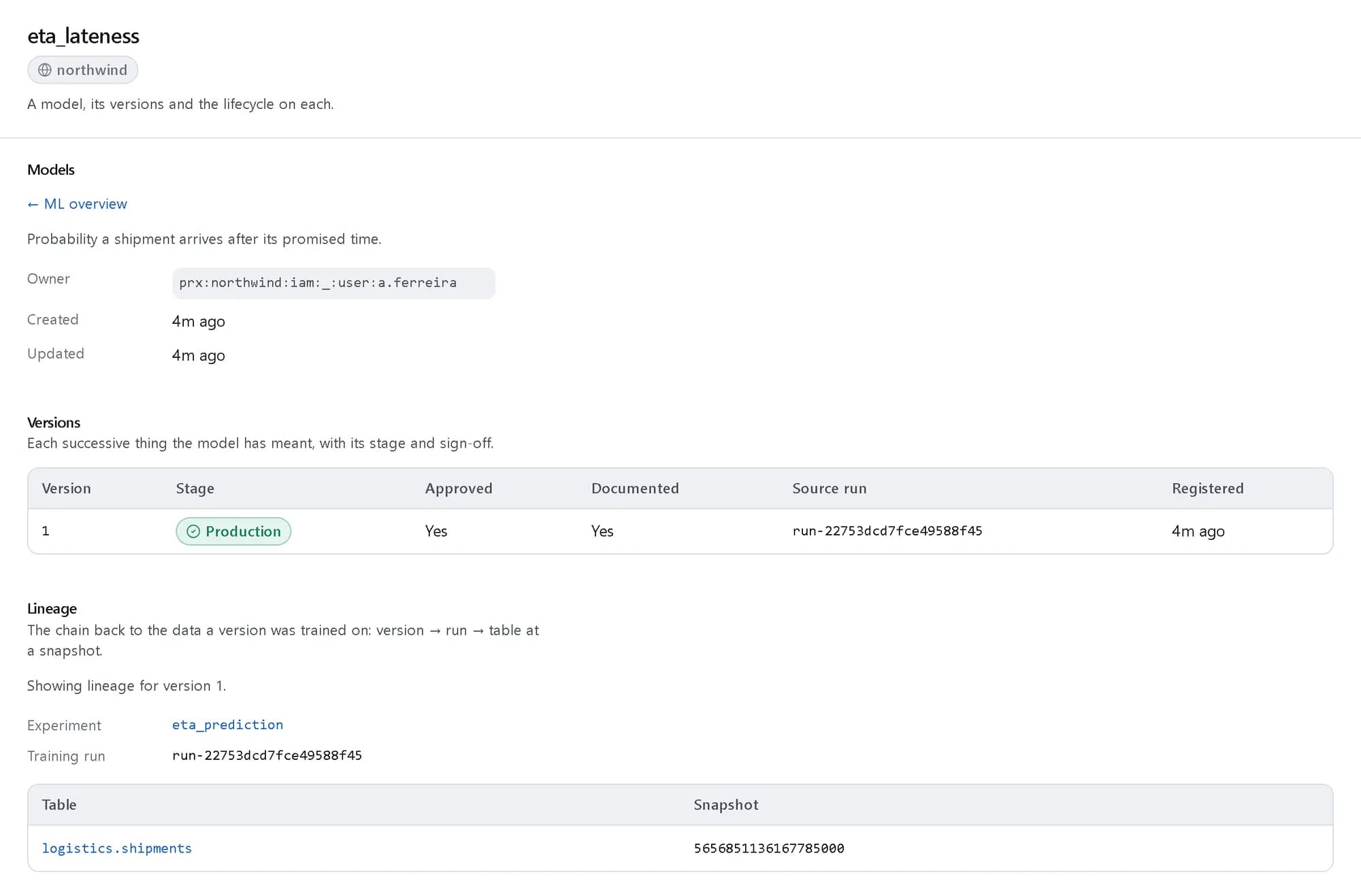
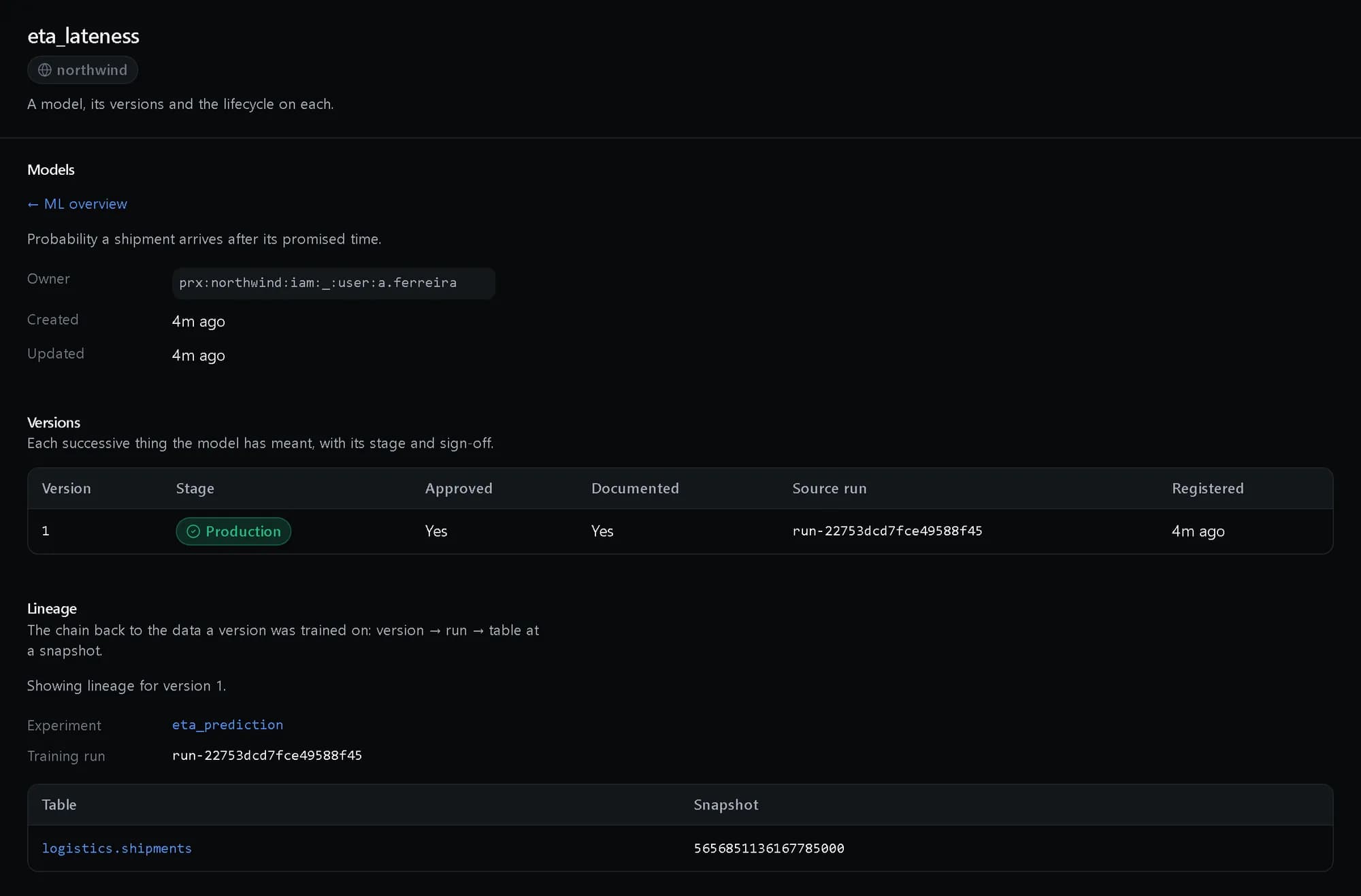
ML & GenAI: A model, documented and traced
The production version with its approval and card, and its lineage to the snapshot it trained on.
Jobs it does
Use cases that run through this pillar, end to end.
The ideas behind it
- Residency before placementWhere something may run is decided before where it will run. Residency rules filter the candidates first, so placement can only ever choose a compliant one.Read the explainer
- An open lakehouseTables in the open Iceberg format, behind a standard catalog, on object storage you choose. Any engine that speaks Iceberg can read them, and every write is a snapshot you can return to.Read the explainer
- Questions that cross systemsA question is split into one request per system that holds part of the answer, each authorized as the person asking, and the parts are joined on people, resources, time and place.Read the explainer
- How Platform Credits workEvery product is priced in one unit, Platform Credits, at a published rate per meter. Usage draws from one balance, and one invoice covers everything.Read the explainer
Where the work happens
Data workspace
The lakehouse laid out as it is organised: the namespaces you own, the tables inside each, and the SQL editor to query them.
Questions, answered
Can we leave with our data?
Yes — that is the design. Tables are stored in the open Apache Iceberg format on S3-compatible storage, readable by any engine, so leaving is a copy, not a migration project.
Which tools can we use?
SQL, pipelines, notebooks and machine learning all run over the same governed tables, with lineage recorded as the work happens.
How is machine learning governed?
Experiments, a model registry and a feature store with point-in-time correctness; promotion is gated on a model card and an approval, and every served model traces to the snapshot it trained on.
What does it cost?
Query and storage usage at published rates on the pricing page, drawing from the same credit balance as the rest of the platform.
See it running.
Create a company and try it with your own data, or talk to us about your setup.