A sovereign, portable lakehouse
Keep your data in open tables, in your region, under your keys.
Tables in open Iceberg format on the storage you choose, encrypted with your own tenant keys, held in the regions your policy allows, governed at query time, and exportable whole when you leave.
For Data, Platform, Compliance
The situation
The data platform is a vendor’s format in a vendor’s region. Residency is a promise in a contract, encryption keys are theirs, and leaving means a migration project nobody wants to fund.
How it works
Step by step, and the product each step happens in.
01
Store tables in an open format
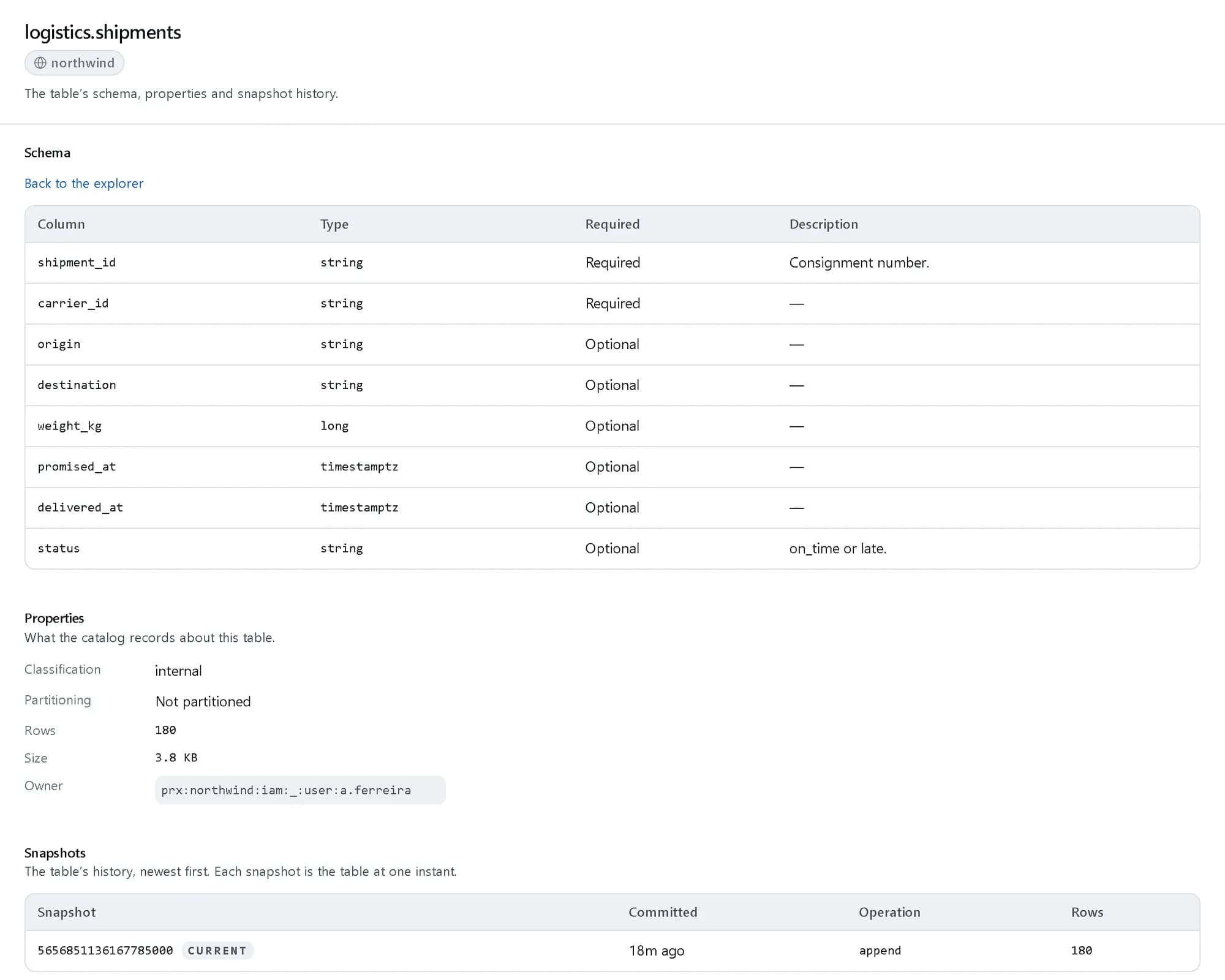
Iceberg tables behind a standards-compatible REST catalog, on S3-compatible storage over MinIO or native buckets.
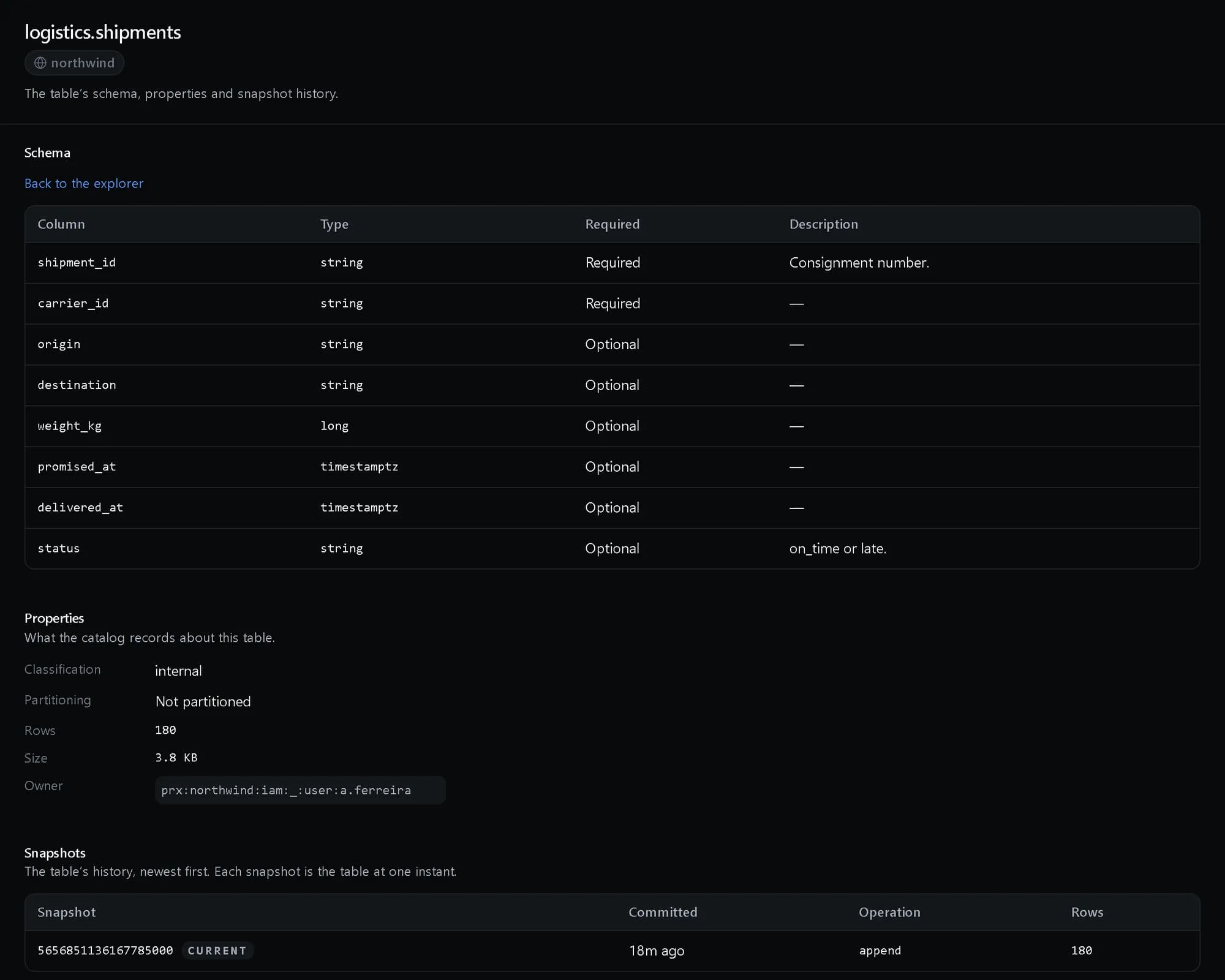
In LakehouseData workspaceOne Iceberg table: schema, properties and the snapshot history. Shown with demo data. 02
Encrypt with your own keys
Data at rest is encrypted with per-tenant keys, and sensitive columns can be encrypted on their own.
In Lakehouse03
Keep it where it must stay
Residency policies per tenant and classification decide which substrates data may live on, enforced at the decision point.
In the Data platform04
Govern every query
Row and column rules are applied in the query plan, so the editor, dashboards, BI tools and the API return the same narrowed answer.
In SQL & Analytics05
Leave with everything
A tenant export takes your data and configuration out with no lock-in.
In Trust and security
What you get
No proprietary format
Any engine that reads Iceberg can read your tables, and an export takes everything with you.
Residency enforced, not promised
Where data may live is a policy the platform checks, per tenant and classification.
History you can query
Time travel by timestamp or snapshot, and branches you can roll back.
Questions, answered
Can we bring our own storage?
Yes. The lakehouse stores tables on S3-compatible object storage, over MinIO or native buckets.
Who holds the keys?
Encryption at rest uses per-tenant keys, with column-level encryption for the most sensitive fields.