Incident response with approvals
One alert queue for everything, and a response that waits for a person where it should.
Alerts from identity, data, video, cloud and the platform in one model and one severity scale, grouped into incidents with an owner and an SLA, worked by a responder agent whose risky steps wait for approval, and closed with a review that links the evidence.
For SRE, Security operations, IT operations
The situation
A camera goes dark, a finance account signs in from a new country and a pipeline falls behind, in three tools with three paging rules. The on-call engineer pieces it together at 3 a.m. and the post-mortem is a document nobody finds again.
How it works
Step by step, and the product each step happens in.
01
One queue across pillars
Every pillar’s alerts share one model and one severity scale, and repeats are folded by dedupe key.
In Operational Intelligence02
Group it into an incident
Related alerts correlate into an incident with an owner, an SLA and an escalation policy with on-call rotation.
In Operational Intelligence03
Respond with a workflow
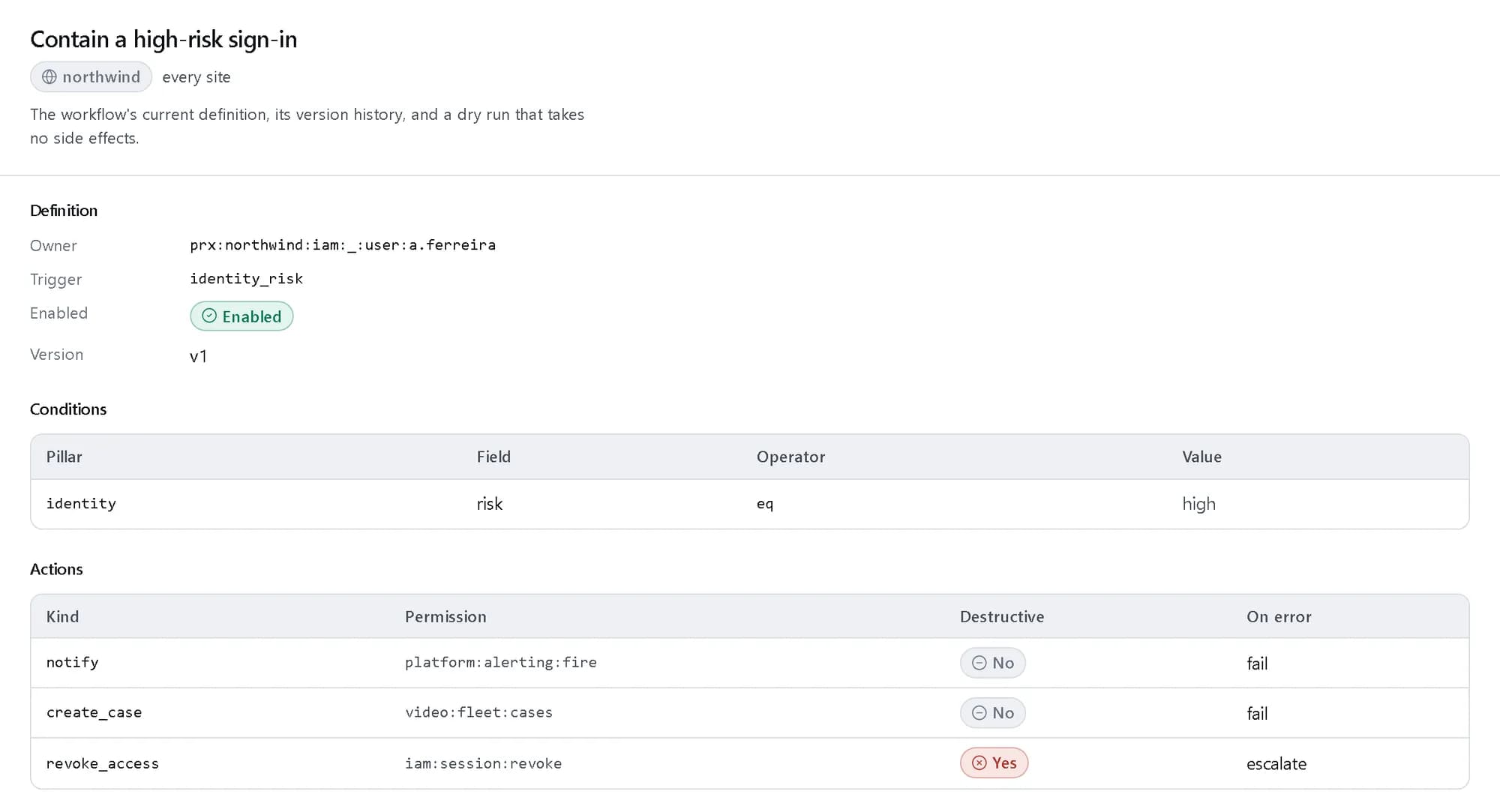
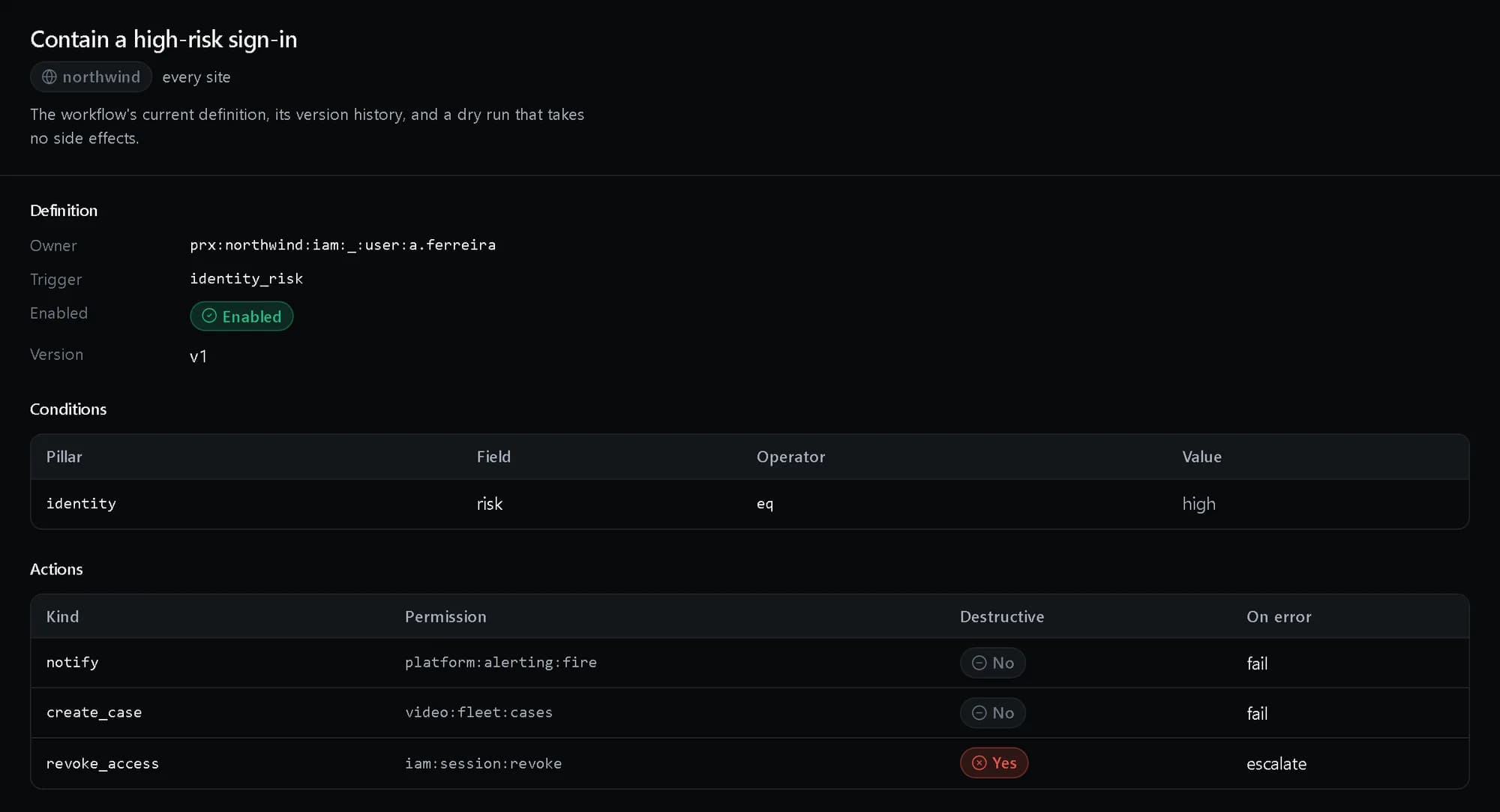
A workflow notifies, opens a case and contains access, each action authorized as the person who triggered it.
In Workflows & AgentsInvestigator consoleTrigger, condition and actions, each with the permission it needs. Shown with demo data. 04
Let the responder agent help
The ops responder reads alerts, acknowledges and assigns, and can run a remediation; risky steps wait for approval.
In Workflows & Agents05
Review and learn
A structured review links the evidence, and analytics report volume, precision, MTTA and MTTR by source.
In Operational Intelligence
What you get
One place to look
Every pillar’s alerts in one queue, ranked on one scale.
Speed without blind automation
Workflows and agents act fast, and destructive steps still wait for a person.
Response times you can measure
MTTA and MTTR by source, from the same records the incident was worked in.
Questions, answered
Does it page our existing tools?
Yes. Connectors reach PagerDuty and Opsgenie, Slack and Teams, and ServiceNow and Jira Service Management.
Can we try a workflow without it acting?
A dry run plans and authorizes every step as a real run would, and takes none of them.